Showing posts with label cooking. Show all posts

Cooking in the Children's House--#2 Orchard Applesauce


Apple Harvest
O down in the orchard
'Tis harvest time,
And up the tall ladders the fruit pickers climb.
Among the green branches
That sway overhead
The apples are hanging
All rosy and red.
Just ripe for the picking,
All juicy and sweet.
So pretty to look at
And lovely to eat.--Helen Leuty

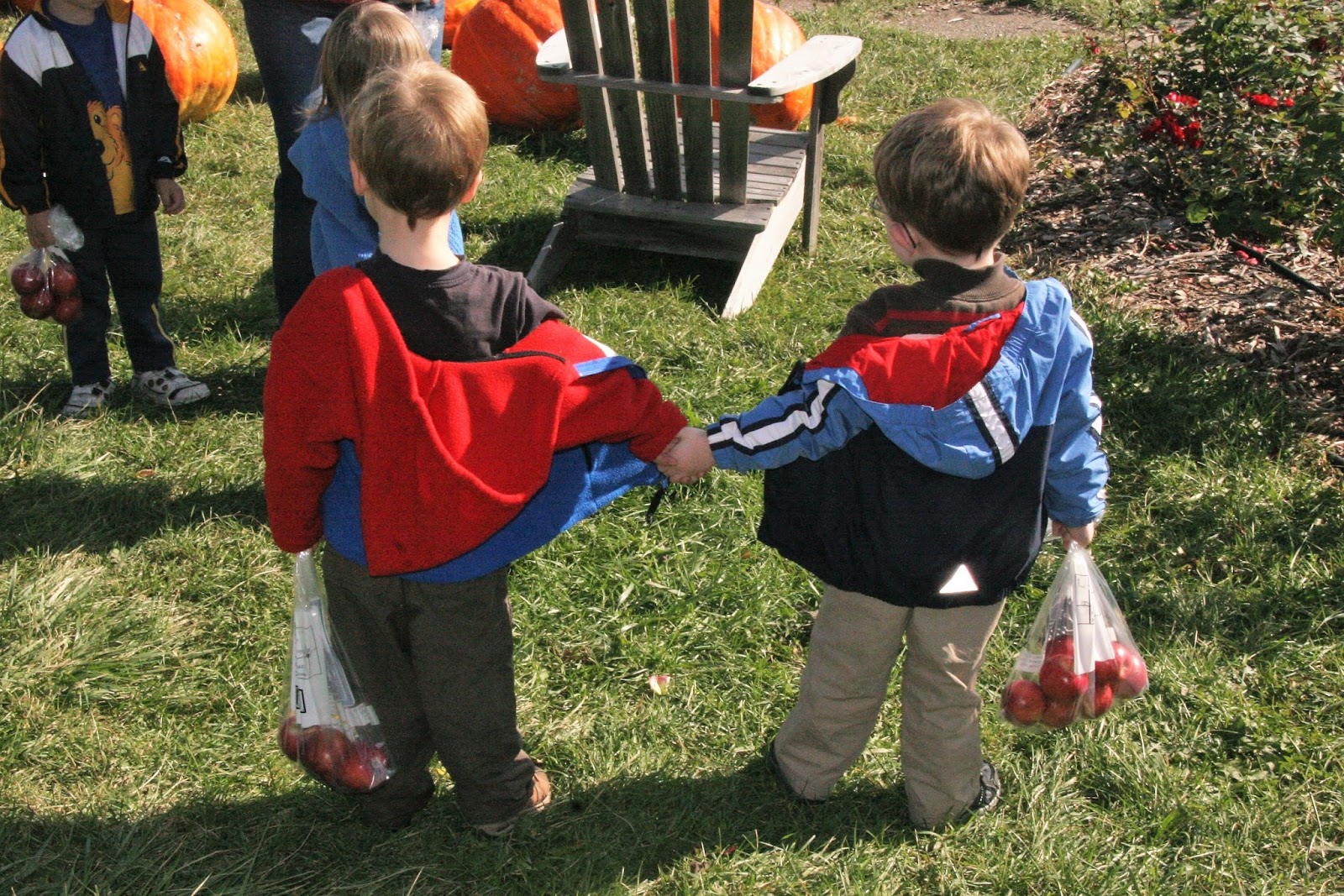
One of the great pleasures of fall here in the Midwest is a trip to the apple orchard. It is our tradition to take the first field trip of the school year to a local orchard and then come back and make delicious from scratch applesauce. This process--literally orchard to snack table--gives the children a real sense of how one of their favorite foods is created.
First stop is a tour of the apple orchard
then inside to the sorting area
with a peek at the pie and cider making


and the cold storage room!
this orchard has a donut machine...
and lets each child take home a bag of apples!


Back at school we get to the applesauce making--
As it cooks it spreads an aroma of cinnamon apple deliciousness throughout the school. What a wonderful fall tradition to share with each other. Yum!
Applesauce
8 apples                   
¼ t salt
½ cup water
¼ t nutmeg
½ cup sugar
½ t cinnamon
Quarter apples, remove cores and add to water. Stir in sugar, salt, and spices and simmer for one hour. Adjust sugar for sweetness of apple. 
Apple Star
It is very beautiful to take an apple and cut it across the middle because throughout the center you find the shape of a star. You cut apples into very thin slices this way and give them to the children and they eat around the center star.

Apple Facts
What you don’t know about apples will seldom hurt you a bit. Sure, there are experts who know and use certain varieties for certain dishes, and you will too. But all apples are good to eat out of hand depending on your taste for sweet or tart, soft or firm. And there are many varieties good for all purposes. A few of these are:
McIntosh                       Jonathan
Ida                                  Cortland
For pies and baking:
Northern Spy               Wine sap
Wealthy                         Rome Beauty
Baldwin                         Spartan
For lunchboxes and salads:
Red & Golden Delicious             Honey crisp
3 medium apples=1 pound
3 medium apples (peeled & sliced)=2 ¾ cups
1 average apple=80 calories   


Cooking in the Children's House--#1 Community Fruit Salad


Every year we begin our cooking program at school with a project designed to build community. Each member of the group brings a piece of fruit from home (this is important to establish an early home/school connection).

We take time to present each piece of fruit describing its sensorial qualities and recognizing the contribution made by the child. It's amazing how this step deepens the experience, and you will hear the words and sentiment expressed over and over as the fruit salad is consumed later at the snack table.

The children wash their fruit, chop it up, and add it to a communal bowl, thus creating an infinite variety of delicious fruit salad.
Everyone enjoys this first cooking endeavor immensely. The excitement of practical life work with real tools is a draw for most. The older students lead the way with their adept use of the utensils and memory of the procedures (including dish washing at the end).
When it comes time to eat the glorious mix it is nice to take a moment or two to observe the children. Some pick out their favorite fruit and eat only that, but most are happy to sample all that went into the salad. "I'm eating Josie's New Zealand kiwi now," they may say to their snack table companion, or "Do you know that my grandpa has raspberries growing right in his yard?" Socialization of the class is taking place now and it is so lovely to hear one child ask another, "Did you like my watermelon in the fruit salad? It's my favorite, is it yours, too?"
At the end of the day we take time for a bit of grace and courtesy and thank each member, again, for their contribution to the group cooking project. We also try to remember to thank the parents at pick up time, and sometimes get to listen in a bit as their child explains the first cooking class in excited tones. They are so proud of their accomplishment and joyfully recount the task they undertook with their new group.

The formation of a community is well underway.

Cooking in the Children's House--Fall

Oh, glorious harvest time!
It is such a joy to share the bounty of the garden with children when school starts again in the fall. They marvel at the dangling bunch of potatoes pulled from the ground and the bounty of heavy tomatoes hanging from vines. Some of the older students are extremely excited as they recall planting these very plants or seeds before the school year ended in spring. The experience of connection to the earth and the nourishment of their bodies brings it all full circle.
"What can we make with this?", they ask as a carrot comes up out of the earth. Picking a bean from a pyramid of leaves, they run to ask, "Can I just EAT this right now?"
YES,YES,YES!
That is, of course, the beauty of having the children's garden right there in the schoolyard. The Montessori method is extended to the outdoors in such a natural way for the children to explore, discover, take care of and consume the small miracles of the earth.
Next: Recipe #1

Cooking in the Children's House

Cooking in the Children's House aims to show how we have incorporated the Edible Schoolyard into our Montessori primary classrooms throughout the year. We learned directly with the children at our school and along the way created a gardening and cooking program for young children that felt right for us. Teachers, children and parents contributed many ideas and countless hours of planting, weed pulling, picking and chopping to realize this dream.
We thank them one and all!
Our inspiration springs from our dedication to the children who traverse the garden paths, but also from our commitment to the educational methods of Maria Montessori and the guiding light of Alice Waters, founder of the Edible Schoolyard project.

"There must be provision for the child to have contact with nature; to understand and appreciate the order, the harmony and the beauty in nature.Maria Montessori

A Children's Garden

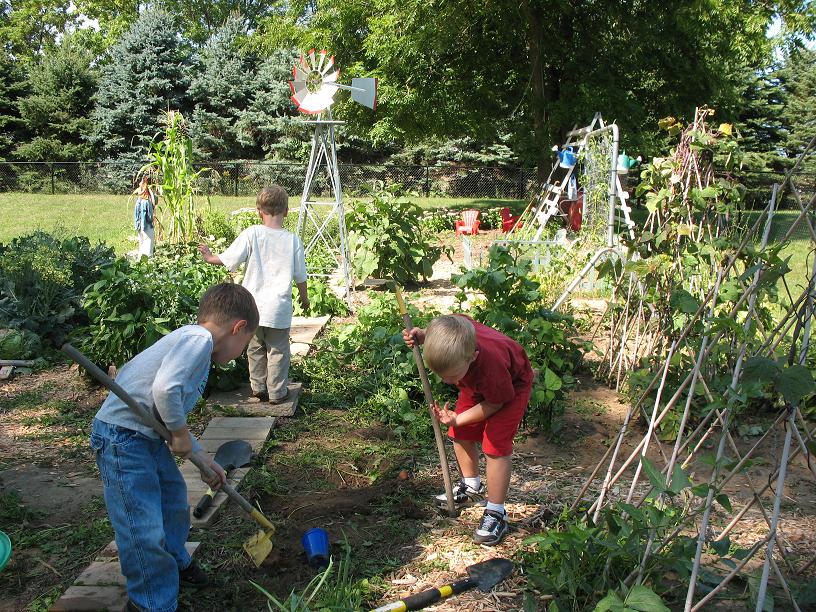
We had been working so hard for this moment--for the garden to go live. The children took to it like ducks to water-- touching, smelling, tasting, running through. Finally our time had come to observe them in this environment we had made, and it was glorious.
The stepping stone path proved to be the perfect guide for the children to follow on their way to discover the garden.
 There were plenty of late summer vegetables ready to pick and taste in the moment or gather for our snack table or cooking class.

Bela the bunny got his fair share, as well.
 
Already that first week of school we were on our way to realizing the Edible Schoolyard, Montessori Children's House style. Happy Day!
Next: Harvest Recipes and Ideas--how Cooking in the Children's House began.


It's Summer--What's Cooking?

Summer cooking at Montessori Children's House means an outdoor kitchen. Our entire program moves outside for the months of June, July and August. The children arrive each morning and enter an environment designed to extend the Montessori method into a natural outdoor space. What a joy to be able to provide this environment, but it is not without an element of preparation. During these warm lazy days of summer I would like to outline the preparation of a Montessori summer kitchen, beginning with the details of how we built our outdoor environment.
Next post: "Garden Party" - a dream, a plot of land, a community working together for children


Cooking in the Children's House--Peanut Butter


Spring Recipes
-Peanuts


Peanut Butter     
Ingredients:

·         roasted peanuts in the shell

·         vegetable oil                 

·         honey or sugar

Tools:


Ingredients:


Let’s go:
Peanut butter is a fun and easy recipe to make!

Crack open the shells and remove the peanuts.


We place peanuts in plastic bags and use a clean stone from our garden to crush them.


If you want chunky peanut butter, put the peanuts in a food processor or grinder and run the chopped mixture through three or more times until the peanut butter is the consistency that you like.


For creamy style peanut butter, chop up the peanuts in a blender. Add about one to two tablespoons of oil in small amounts and regrind or blend the mixture until the peanut butter is the desired consistency. Add sugar or honey by the teaspoon until the taste is just right.


Store in refrigerator. Homemade peanut butter contains no preservatives or other

additives and has a wonderful fresh peanutty taste.